
 Search


What are clamping sets?
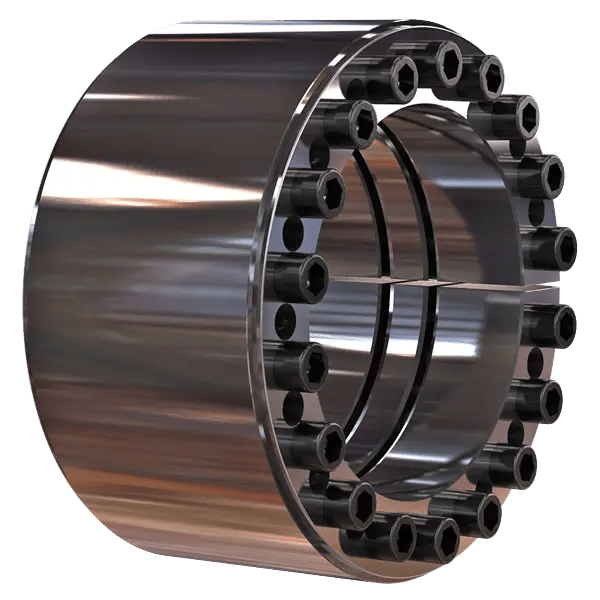
Clamping sets are used in mechanical engineering to create a friction-fit shaft-hub connection. The clamping set connects the hub, for example of a gear, to a shaft via friction. This backlash-free connection between shaft and hub allows for the reliable transmission of torques and axial forces. Depending on the clamping set design, this type of connection can also transmit high bending moments.
Operating principle of clamping sets
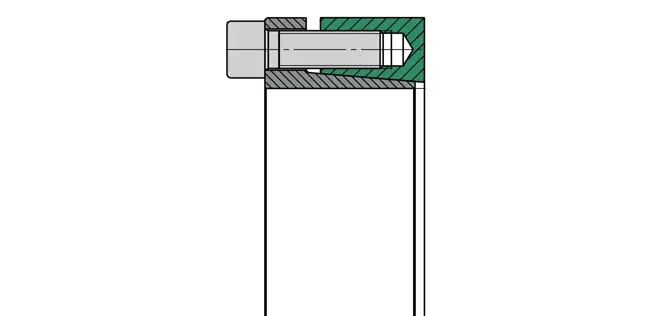
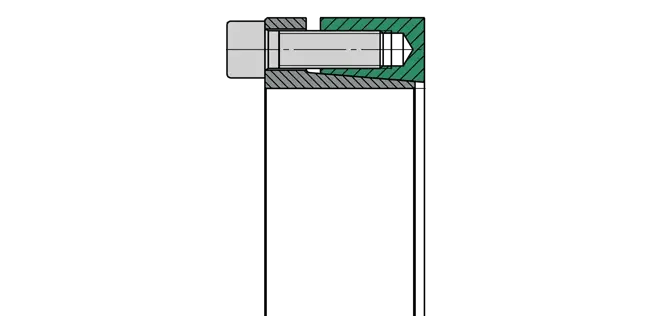
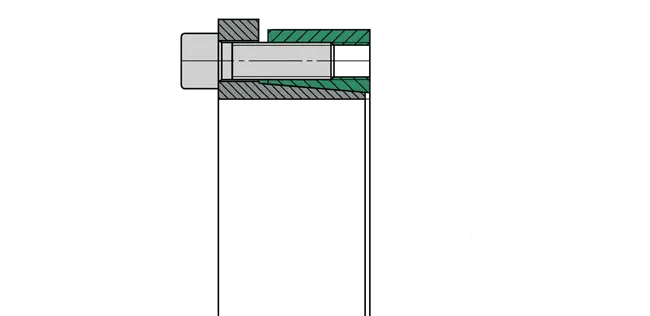
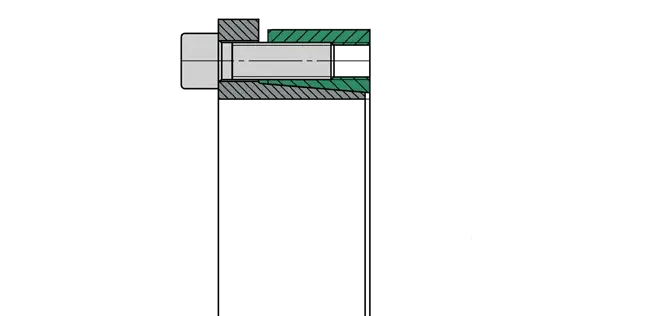
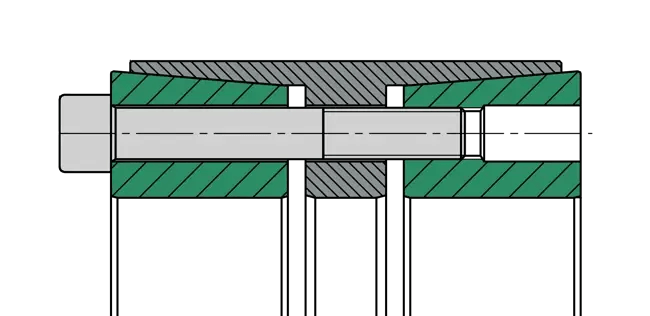
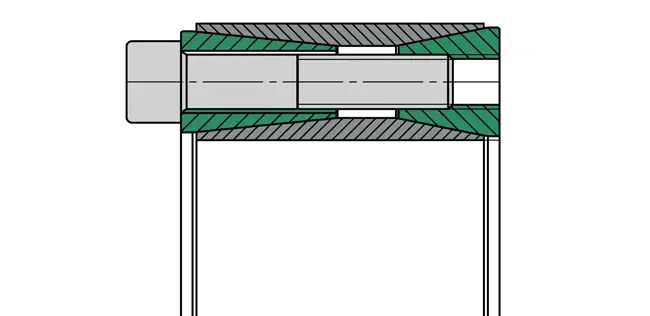
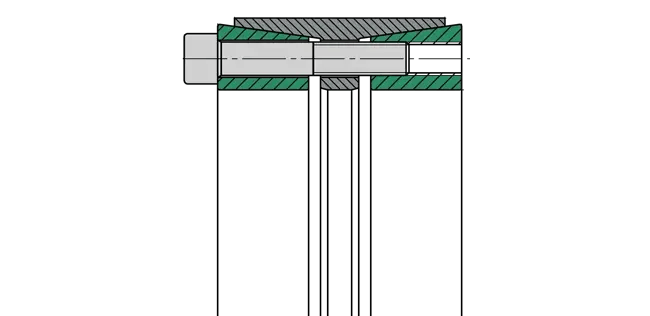
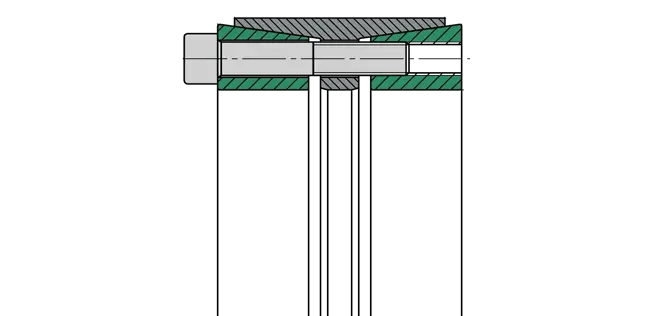
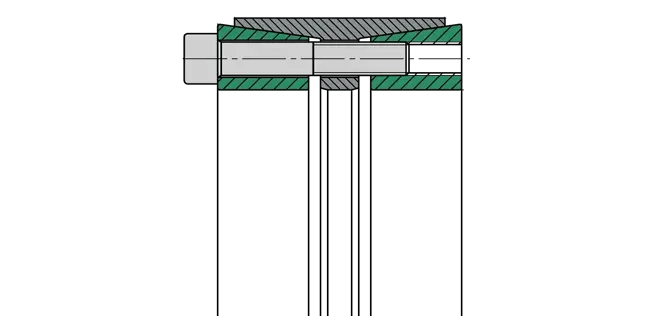
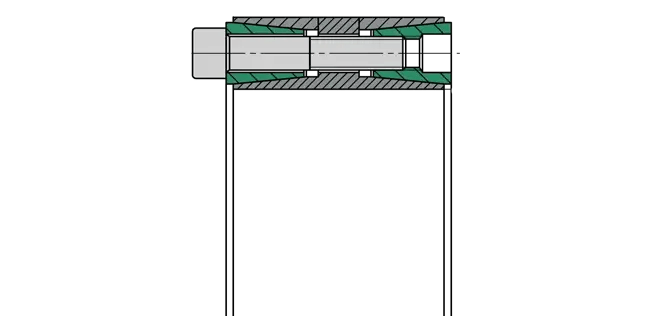
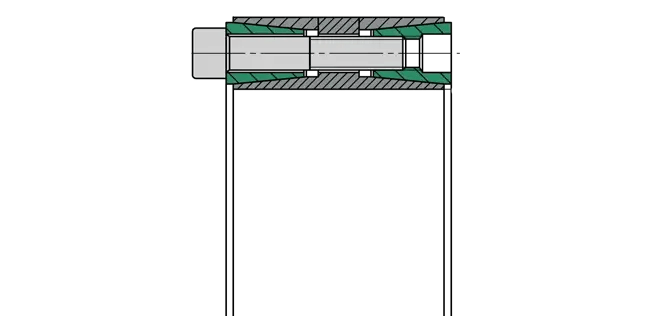
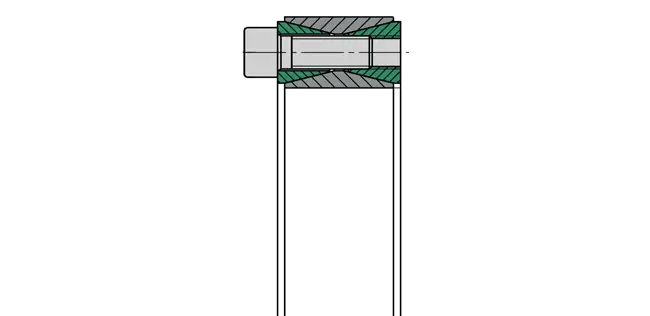
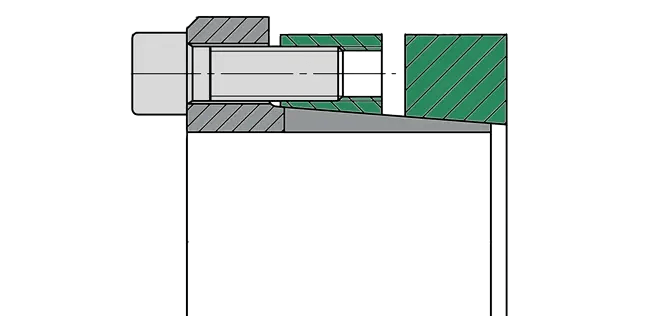
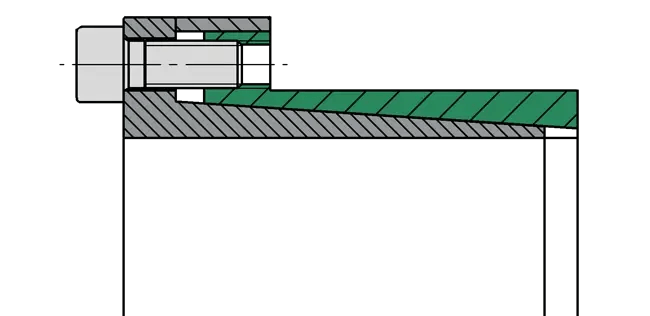
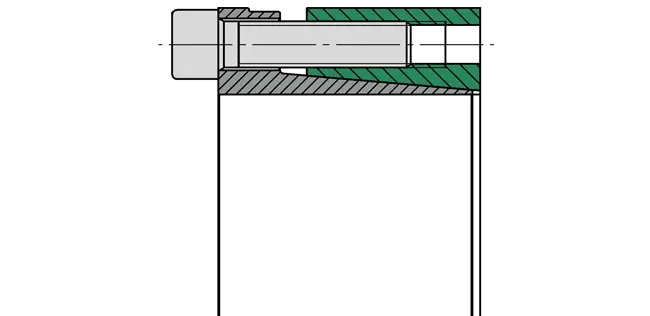
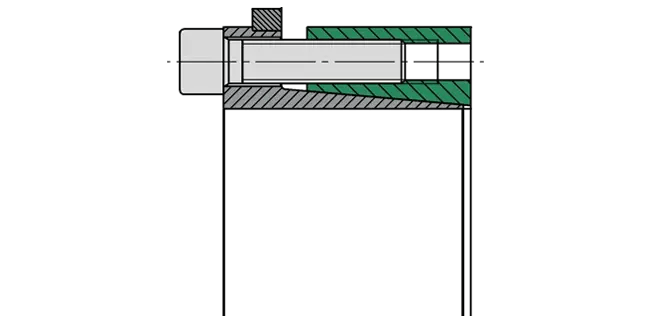
Clamping sets (also called "conical clamping elements" or "internal clamping elements") consist, depending on the design, of one or two conical pressure rings and a conical clamping sleeve. Tightening the clamping screws to the specified torque draws the conical pressure rings onto the conical surface of the clamping sleeve. This process generates a radial force both inwards and outwards. While the outer diameter increases, the inner diameter of the clamping set decreases. This creates a friction-fit connection between the clamping set (conical clamping element) and the shaft and hub.

Unlike conventional keyway connections, a clamping set distributes stresses evenly across the entire contact surface of the shaft. This uniform stress distribution creates a reliable, freely positionable, and, most importantly, wear-free connection. Furthermore, the shaft can often be made smaller, which can lead to a reduction in the overall weight of the assembly.
Types of clamping sets
Clamping sets are available in a wide variety of designs and configurations. In addition to the torques or bending moments to be transmitted, the available installation space and loads also play a crucial role in selecting the right product. Whether self-centering, low surface pressure, high speeds, or stainless steel versions for the food and chemical industries – the product portfolio of TAS Schäfer GmbH offers a suitable solution for every application.
Clamping sets are divided into two groups: the more flexible conical clamping elements and the rigid conical clamping elements .
More compliant conical clamping elements
The compliant conical clamping elements have a total of four conical functional surfaces and several individual components. Due to their design and the resulting larger cone angle, these more compliant clamping sets are not self-locking. Therefore, pressing down the pressure rings during disassembly is unnecessary. Because the pressure rings are not moved axially on the shaft during assembly, no axial displacement occurs between the shaft and hub.
Rigid conical clamping elements
Rigid conical clamping elements have only one or two conical functional surfaces. This results in different technical properties compared to more flexible conical clamping elements. Due to their design, rigid conical clamping elements can transmit higher bending moments. Additionally, this design offers improved self-centering and self-locking properties. Another advantage is that the clamping screws are not subjected to further stress from applied forces during operation after installation. This increases the safety and service life of rigid conical clamping elements.
Examples of rigid conical clamping elements are the 3012 and 3006 series.
Generally, clamping sets can be categorized according to their application and the available installation space. Short clamping sets are typically capable of absorbing low to medium torsional and bending moments, while wide clamping sets are used for high to very high torsional and bending moments. The properties of individual clamping sets, including their transmissible torsional and bending moments and installation length, can be found in the product overview below. Further properties, such as self-locking, self-centering, or the clamping set's potential bending moment contribution, can be found on the respective product pages in the catalog.
Advantages of clamping sets
Clamping sets offer significant advantages over conventional keyway connections: backlash-free power transmission, free positioning on the shaft, and the elimination of complex groove machining. For industry, the performance of individual components, cost advantages, reduced assembly times, and increased service life when fastening components to rotating shafts play a crucial role.
A traditional method used in the past was the connection via a keyway. With this type of connection, a groove is milled into the shaft, and this is also done into the hub. However, milling these grooves is costly and time-consuming. A further disadvantage is the reduction in transmissible torque due to the weakening of the shaft. Often, movement and ultimately play occur in a keyed connection, which can impair the accuracy of a machine system and increase the risk of failure.
This risk can be avoided with a force-fit shaft-hub connection using a clamping set, as no play is introduced. The use of a clamping set therefore ensures precision and safety. Furthermore, costly manufacturing processes, such as milling or broaching the grooves, can be eliminated.
Another advantage of using a TAS Schäfer clamping set is its positioning on the shaft. Unlike a keyway, the clamping set can be moved freely on the shaft.
TAS Schäfer clamping sets can also be used for existing shafts with a groove, thus enabling the optimization of existing systems.
Series such as the TAS 3015 DK clamping set prevent direct movement on the shaft during assembly. This avoids costly damage to the shaft during installation.
Assembly of clamping sets
Assembly is achieved by inserting the clamping set between the components and then tightening the clamping screws. The screws must be tightened in a specific sequence and to the same torque. The use of conical surfaces increases the outer diameter and decreases the inner diameter of the clamping set, creating radial pressure.

The clamping forces are provided via the screws (force-controlled). This allows for direct compensation of the play between the shaft and hub. The clamping sets from TAS Schäfer GmbH are supplied ready for installation. For proper function and to achieve a sufficient and consistent coefficient of friction, the contact surfaces of the shaft and hub must be clean and coated with a film of oil.
Corresponding assembly instructions for the clamping sets are available via the online platform of TAS Schäfer GmbH: TAS Schäfer Assembly Instructions
Typical application examples of clamping sets
Clamping sets have a wide range of applications across many different industries. These include classic mechanical engineering, conveyor and drive technology, and the packaging and food industries, to name just a few. Ultimately, clamping sets enable the precise fastening of hub bodies to shafts or axles, such as when fixing gears and sprockets. Furthermore, our clamping sets are used in conveyor drums and crushers. In the food and petrochemical industries, stainless steel versions of clamping sets are frequently used in filling and mixing systems. Clamping sets are also used in the packaging industry for fastening pulleys and for transporting objects within machines.